The Pre-Pan Handover: A Kitchen Job for the Dog Who Thinks Dinner Is a Team Sport
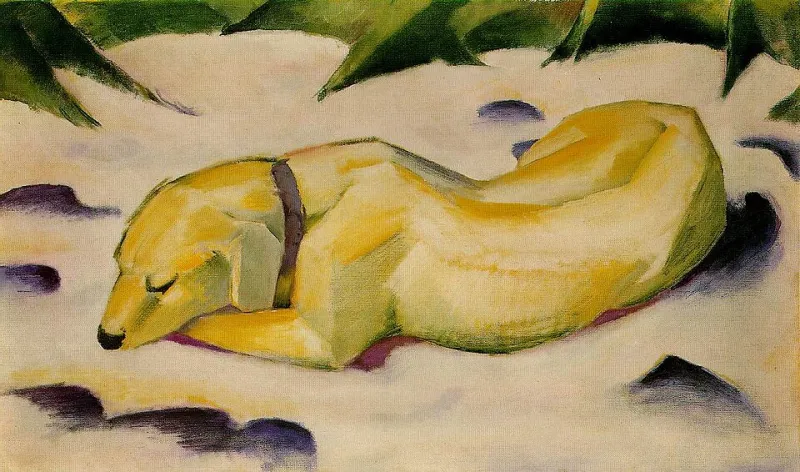
Photo: Franz Marc, Public domain, via Wikimedia Commons
It is 6pm in November, the kettle is on, and your dog has decided that dinner preparation is a group activity. You step left; they step left. You open the fridge; they are already sitting in front of it. You turn to the hob and nearly go over the dog, the lead and a pile of post that has somehow become kitchen furniture.
The bit between walking through the door and getting food on the table is not usually a training failure. It is a handover problem. Your dog has been waiting all day for the good part, and you have been waiting all day for a cup of tea. Both of you are a bit impatient. A short, repeatable ritual can give the dog something to do that is not tripping you up or staring at the bin.
Why the dinner-hour wobble happens
Dogs are brilliant at spotting the cues that lead to food. The kettle, the fridge door, the clatter of a pan and the smell of something warm all say the same thing: something is happening, and I would like to be involved. If your dog is also hungry, bored after a day alone, or simply used to hovering near the worktop, the kitchen becomes the most interesting place in the house.
That does not mean you need to be stricter or louder. It means the dog needs a job that is better than being a furry trip hazard. The aim is not to banish them from your life while you cook. It is to create a clear, calm spot where they can settle, chew or sniff, while you move around the kitchen without doing a little dance with a saucepan.
Build a two-foot enrichment station
The best kitchen station is small, boring to look at and easy to reset. Think of it as a doormat with a purpose. Find a spot just outside the main cooking zone: beside the fridge, in the doorway, or in the hallway with a clear sightline to you. If your kitchen is tiny, a baby gate across the doorway can be the kindest piece of kit you own. The dog can still see and smell you without being under the hot pan.
Put down a rubber-backed mat or a washable bed. Add a lidded tub that lives on the worktop or in a cupboard, containing two or three low-mess enrichment items. The station should be set up before the kettle goes on, not after the dog has already started pacing. A handful of kibble from their daily allowance goes into the tub, so you are not adding a second dinner by accident.
Three low-mess jobs for the underfoot dog
1. The tea-towel burrito. Scatter a small handful of kibble across a clean tea towel, roll it up loosely and fold the ends in. Your dog has to unroll it with their nose and paws. It is quiet, cheap and uses food they already eat. Supervise, and remove the towel if your dog starts swallowing fabric rather than solving the puzzle.
2. The fridge-door lick mat. Spread a thin layer of a dog-safe paste onto a suction-cup lick mat and stick it to the floor or a tiled splashback at dog height. Check labels like you are reading a legal document: no xylitol, no grapes, no chocolate, no onion or garlic. Plain dog-safe yogurt, mashed banana or a purpose-made dog paste works well. Keep portions small, especially if your dog is on a diet. A lick mat is low mess because the food is stuck to the mat, not scattered across the lino.
3. The muffin-tin hunt. Put a few pieces of kibble into the cups of a muffin tin and place a couple of suitable dog toys or silicone muffin cases over the top. Your dog has to nose them out. It is a good five-minute brain game and easy to wipe clean afterwards. Only use this if your dog does not chew and swallow toy parts, and put it away when they are done.
Safety rules that matter more than the cute bit
The kitchen is full of things that are fine for humans and not fine for dogs. Onions, garlic, grapes, raisins, sultanas, chocolate, xylitol and cooked bones are the usual suspects, but salty takeaways and rich gravy are not a great idea either. Keep the bin lidded, push food away from the edge of the worktop and do not let the dinner ritual become a sneaky-scrap ritual. If you want to give a treat, give it in the station and make it a dog-safe one.
Hot surfaces need respect too. Turn pan handles inwards, keep the dog out of the path between the hob and the sink, and never leave a hot tray at nose height. A gate or a station just outside the kitchen is safer than asking a hungry dog to make good choices next to an open oven door.
Settling is the other half of the job. Reward the dog for lying on the mat, not for whining beside the fridge. Keep the routine calm and predictable: station, job, quiet praise, dinner. If your dog finishes the activity in two minutes and starts pacing again, give them something else to do or release them to a bed in another room. The point is not to keep them busy for an hour. It is to bridge the ten minutes when you are most likely to be stepped on.
The ten-minute sequence
- Come in, put the kettle on and take the dog straight out for a quick toilet break if needed.
- Set the station before you start cooking: mat down, tub out, job ready.
- Send the dog to the mat and give the enrichment item.
- Cook. If they settle, quietly praise. If they finish early, swap to a chew or release them to their bed.
- Eat your dinner. The dog gets their own meal in their own bowl, not from your plate.
For dark winter evenings, keep the station near a light and dry the dog's paws before they settle. A wet dog on a cold mat is not a calming picture. If your dog has had a long day alone, a midday walk from a trusted local walker can also take the edge off before the dinner-time handover. At Fetch My Dog, we are all for routines that make busy evenings feel less like a obstacle course and more like a normal Thursday.
If your dog is pacing, panting, scavenging or unable to settle even with a job, do not just assume they are being cheeky. Hunger, pain, boredom and anxiety can all look like kitchen nuisance. A chat with your vet or a qualified behaviourist is worth it if the ritual does not help within a week or two.