Pack Light: The Case for the Plus-One Dog Walk
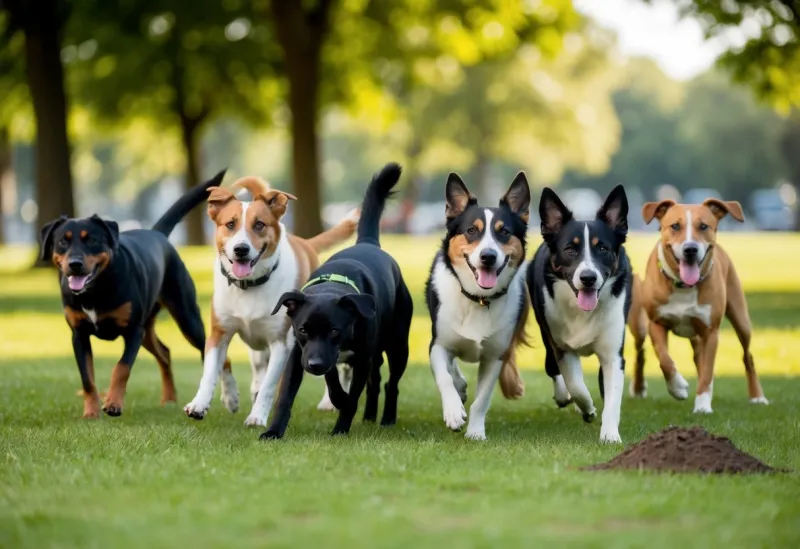
There’s a certain picture that comes to mind when someone says ‘group dog walk’: a cheerful parade of dogs trotting across a park, tails up, walker in the middle like a very relaxed head teacher. It looks brilliant. And for some dogs, it is brilliant. But as the dark afternoons of November 2026 close in and more owners look for help with midday exercise, it’s worth asking a quieter question. Does your dog actually want a pack — or would they rather have a plus-one?
The appeal of the pack, and the limit of the picture
Dogs are social animals, but ‘social’ is not a single setting. Some dogs light up around others: they read the group, share sniffing spots, and come home pleasantly tired. Others find a crowd about as relaxing as a busy Friday pub. That doesn’t make them antisocial or badly trained. It makes them individuals with a social battery.
A group walk can be wonderful enrichment. It can also be a lot: new dogs, different play styles, a walker splitting attention, and a route that moves at someone else’s pace. For a confident, bouncy dog, that’s a party. For a dog who likes one good friend and a long sniff, it’s a commute.
The mistake is assuming the group option is the premium option. It isn’t. The right walk format is the one your dog can handle well — not the one that looks most impressive on a schedule.
Reading the room: subtle signs of overwhelm
Owners often look for obvious signals: growling, snapping, hiding. Those matter, but they’re late-stage messages. Most dogs whisper before they shout.
Watch for the small stuff. A dog who licks their lips when no food is around, yawns repeatedly, shakes off like they’re wet, or suddenly finds the pavement very interesting may be trying to defuse a situation. A stiff tail, a hard stare, or a body that turns away from the group are also worth noting. So is the dog who trails at the back, scans constantly, or stops sniffing altogether. Sniffing is a dog’s version of reading the room; if they’ve stopped, they may be too busy managing the crowd.
Then look at the after-walk report. Does your dog come home wired and unable to settle? Are they crankier than usual, or do they crash for hours? A bit of healthy tiredness is fine. A dog who seems shut down, clingy or irritable may have had too much of a good thing. And remember: quiet doesn’t always mean calm. A dog who stands still at the edge of the group may be overwhelmed, not relaxed.
What a responsible walker should check before mixing dogs
Good group walks aren’t thrown together. A responsible walker assesses before adding a dog to the mix, and that assessment should go beyond ‘they seem friendly’.
They’ll ask about your dog’s age, size, energy, health and mobility. They’ll want to know how your dog behaves on lead, how they greet other dogs, whether they have strong prey drive, and what they do when they’re unsure. They should ask about recall — even if walks are on lead — and about any history of guarding, mounting or humping. They should also think about the mix: a bouncy adolescent Labrador and a cautious older terrier may both be lovely, but they may not be lovely together.
Introductions matter. Neutral ground, parallel walking, and a bit of space are better than a free-for-all in a small park. Group size matters too. ‘Group walk’ can mean three dogs or ten, and those are very different experiences. Ask how many dogs are typically out, how many walkers are present, and what happens if your dog needs to come out of the group for a quieter stretch.
A good walker will also have a plan for the what-ifs: a dog who gets overwhelmed, a route that gets busy, a sudden noise, or a change in weather. In the UK, a November walk can go from crisp to soggy in minutes, and a crowded pavement can feel very different from an open common. Ask what they do when plans change. The answer tells you a lot.
The traffic-light checklist
If you want a simple way to think about it, use a traffic-light checklist. It won’t replace professional assessment, but it’s a useful starting point for owners and walkers.
Green — group walks look like a good fit. Your dog is relaxed around other dogs, keeps a loose-ish lead, sniffs and explores, responds to their name, and recovers quickly if something startles them. They can share space without guarding it, and they come home settled rather than frazzled.
Amber — proceed with care. Your dog is a bit hesitant, watches other dogs closely, slows down in a crowd, or needs frequent prompting to keep moving. They may be fine with one compatible dog but not a bigger group. This is the zone for a trial walk, a smaller group, or a plus-one arrangement.
Red — choose a different format for now. Your dog freezes, tucks their tail, pants heavily when it isn’t warm, tries to hide, or reacts at other dogs. They may refuse food or seem shut down after a walk. That’s not a dog who needs to ‘get used to it’. That’s a dog who needs a quieter plan, possibly with professional behaviour support.
The checklist isn’t about labelling your dog. It’s about matching the walk to the dog in front of you.
Plus-one doesn’t mean lonely
A solo walk doesn’t have to be a boring march around the block. A good walker can turn it into a sniffari, a short training session, or a calm decompression walk with plenty of pauses. And a ‘plus-one’ walk — your dog and one compatible friend — can be the sweet spot for dogs who like company but not a crowd.
The pack isn’t the goal. A happy dog is. Some dogs genuinely thrive in a lively group; others do their best work with one person and a long line. Neither is a failure of training or socialisation. It’s just good matchmaking.
Before you book
Ask the walker how they assess new dogs, how they introduce them, and how they decide when a dog needs a break. Ask for the group size and the walker-to-dog ratio. Ask what an update looks like — not just ‘all good’, but something specific about your dog’s behaviour. And trust the small signs you see at home.
At Fetch My Dog, the aim is straightforward: trusted care that fits the dog, not the other way round. If your dog comes alive in a pack, brilliant. If they’d rather have a plus-one, that’s brilliant too. The best walk is the one they can actually enjoy.