A Street Map With Escape Hatches: Route Planning for Dogs Who Need More Space
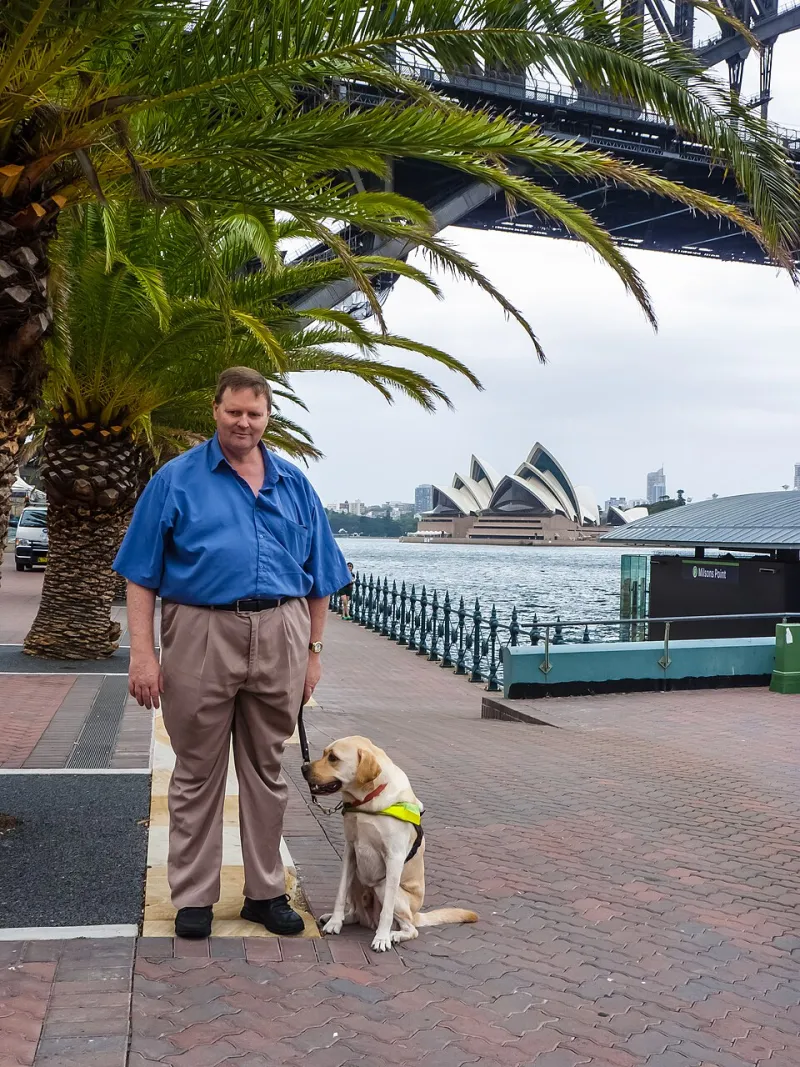
Photo: John Robert McPherson, CC BY-SA 4.0, via Wikimedia Commons
Every reactive dog owner has done the walk of shame: the one where you round a corner at 8.40am straight into the school run, a pram, a scooter and a labrador, and spend the next four minutes spinning on the spot while your dog broadcasts their feelings to the entire postcode.
The problem is rarely the dog’s training. It is usually the route. Most of us walk the same loop on autopilot because it is the right length and it starts at our front door — and then we are surprised when the same pinch points cause the same explosion, week after week.
A calmer approach is to stop thinking in terms of one walk and start thinking in terms of three. An everyday route, a fallback route, and a short escape route. Not every walk needs all three, but knowing them means you are never stuck improvising on a narrow pavement with a dog who is already over threshold.
Start with a trigger diary, not a guess
Before you redraw anything, spend a week noting what actually happens. Not the dramatic incidents — the ordinary ones. Where does your dog first prick up? Which corner makes them speed up? Where do they start scanning?
A simple note on your phone is enough: time, street, what appeared, how far away it was, and how your dog responded on a scale of one to five. Within a week, patterns appear. It is almost never the whole neighbourhood — it is four or five specific spots and two or three specific times.
Typical culprits in a British residential area:
- The school run. Roughly 8.30 to 9.00 and 3.00 to 3.45 on weekdays, with a long tail of parked cars, slammed doors and small people running.
- Bin day. Wheelie bins on pavements narrow everything, and the lorry itself is loud, slow and blocking.
- Delivery windows. Vans stopping mid-road, drivers stepping out with parcels, doors opening onto the pavement.
- The postie’s round. Often the same fifteen-minute window each morning, and your dog may well know it before you do.
- Other dogs behind fences. A reaction to a barking dog you cannot see is still a reaction, and it spikes cortisol just the same.
- Pinch points. Blind corners, hedges that block the view, bus stops, café tables spilling onto the pavement and that one stretch where the pavement disappears entirely.
- The pub. Not the pub itself, usually, but the doorway at chucking-out time, and the pavement tables that look exactly like a nice place to say hello.
Designing route A: the workhorse
Route A is your default. Twenty to thirty minutes, wide pavements, good sightlines, and the fewest possible unavoidable triggers. It does not have to be pretty. The perimeter of a quiet industrial estate on a Sunday, a wide residential crescent, the outside edge of a park rather than the path through the middle — all of these work.
The test of a good A route is simple: can you see a trigger coming from far enough away to do something about it? Distance is the single most useful tool you have, and sightlines are what buy you distance.
Time it, too. The same street at 6.30am and at 3.15pm are effectively two different places. If your dog can only manage route A at 6.45am, then that is when route A happens.
Designing route B: the pressure valve
Route B is for the days when A is busy, or when your dog is already a bit wired — after a vet visit, a house full of visitors, a night of fireworks. It is usually longer in time but quieter in content: an empty churchyard, a towpath stretch, a business park at the weekend, a lane with grass verges on both sides.
Route B is where the sniffing happens. Let your dog stop. Let them read the whole pavement. A slow, information-rich walk does more for a reactive dog’s nervous system than a brisk one that keeps them on edge the whole way round.
Designing route C: the get-home-fast line
Route C is the one nobody plans and everybody needs: a five-minute loop with at least two possible exits, wide enough to pass someone at a distance, and leading directly home. It is not a failure route. It is the sensible option on the day your dog has already had enough before you reach the end of the road.
Build C around your own front door and rehearse it. A dog who has practised turning for home calmly is a dog who does not learn that turning back is a disaster.
Build exit lanes into every route
An exit lane is anything that lets you create space in under thirty seconds without a drama. A driveway. A gap in a hedge. A grass verge. A side street. A dropped kerb onto a quiet road. A wide junction where you can step off the pavement and wait.
Walk your routes once with nothing else to do and mark them mentally — literally, if it helps, with a note on your phone. You are looking for places where you can step aside, turn your body, put your dog on the far side of you, and let the thing pass. Most reactive dogs cope far better with a managed pass at eight metres than a surprise one at two.
Carry the tools that make an exit lane work: a handful of treats for a scatter, a long line if you have a safe space, and a yellow ‘I need space’ lead slip or bandana if you would rather people gave you a wider berth. Some will ignore it. Enough won’t.
Handing it over: the one-page brief
If a walker or sitter is taking your dog out, the route plan is only as good as the briefing. Verbal handovers get forgotten; a single page on the fridge does not.
Include:
- A sketch or print of routes A, B and C, with the trigger spots marked.
- The times to avoid and the times that work.
- Your dog’s distance threshold — how close is too close — in plain numbers.
- What to do when it goes wrong: turn, create space, scatter treats, and come home. Explicit permission to cut a walk short is the most useful line on the page.
- What not to do: no on-lead greetings, no ‘let them say hello’, no dog park, no new routes invented on the day.
- Your vet’s number, your number, and the phrase ‘if in doubt, ring me’.
Ask the walker to follow the plan for the first few outings and to text you a one-line summary afterwards. After a fortnight you will know whether the routes are working for someone else’s timing as well as your own.
When the route alone isn’t enough
Route planning reduces the number of surprises, but it does not train a dog out of reactivity, and it is not meant to. If your dog is reacting at distances that keep shrinking, if they are struggling to recover afterwards, or if the behaviour has appeared suddenly in an older dog, get a vet check first — pain and thyroid issues can both present as irritability on the lead — and then speak to an accredited behaviourist.
In the meantime, keep the map in your pocket. The best walk for a reactive dog is rarely the most scenic one. It is the one where nobody had to apologise to anybody.