Nose Before Miles: Why the Twenty-Minute Stop-Start Walk Does More Than a Long March
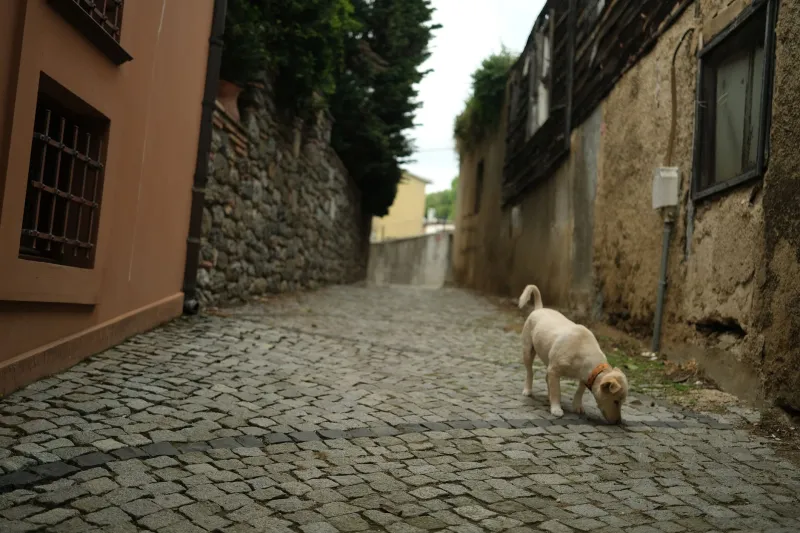
Photo: dog sniffing pavement on UK street autumn morning with lead, via koala.sh
Most of us have done the guilty maths. It is 7.40am, dark, drizzling, and the dog has had fifteen minutes around the block. You get back to the door, towel off four muddy paws, and think: that was not enough. Somewhere online, someone is posting a seven-mile fell run with a spaniel. Your dog, meanwhile, is asleep before you have taken your coat off.
Here is the quiet truth: a shorter walk with more stopping can do more for a dog than a longer march with fewer sniffs. Scent is how dogs read the world. A twenty-minute walk where your dog sets much of the pace and you follow the nose can be mentally tiring in a way that mileage alone rarely matches. Some trainers call it a sniffari. You can call it whatever gets you out the door.
Why the nose knows more than the legs do
Dogs do not experience a walk as a list of streets. They experience it as a stream of information: who passed this way, how long ago, whether they were relaxed or worried, what they had eaten, whether another dog is new to the area. Letting a dog stop to take that in is not laziness. It is enrichment.
Mental work burns energy. A dog who has spent twenty minutes decoding kerbs, gateposts and patches of grass often comes home more settled than a dog who has trotted two miles beside a moving human. That matters on busy UK days when the daylight is short and your diary is full. The goal is not to replace longer walks forever. It is to make the short walk count.
The twenty-minute shape of a good scent walk
Think of the walk as three loose phases rather than a route with a finish line.
The first five minutes: get the news. Let your dog stop at the usual hotspots. The lamp post, the neighbour’s wall, the patch of grass where the foxes cut through. Keep the lead loose where it is safe to do so and let the sniffing happen.
The middle ten minutes: wander with purpose. Pick a quiet loop with plenty of edges. Pavements beside hedges, park paths, side streets with low traffic. You are not marching. You are ambling with a destination, and the destination can be as simple as the next corner.
The last five minutes: wind down. Head home on a familiar stretch. If your dog is still frantic to sniff everything, that is information. It may mean the walk was too short, too exciting, or simply that tomorrow needs a different route.
Pavements, parks and quiet side streets
You do not need a meadow. A good scent walk can happen on ordinary streets. Pavements are rich in scent because so many dogs use them. Parks give you grass, tree roots and the social noticeboard of every dog in the postcode. Quiet side streets are the gold standard for dogs who find traffic or crowds overwhelming.
In the UK, the practical rules still apply. Keep to the pavement unless you are in a park where dogs are allowed off lead. Watch for broken glass, discarded food and the usual winter hazards. Take a torch on dark mornings and wear something visible. A reflective lead and a clip-on light are not glamorous, but they make a twenty-minute walk much less stressful.
When your dog pulls: turning the walk into a team sport
A scent walk is not a free-for-all. If your dog drags you from smell to smell, the walk becomes a tug-of-war and nobody relaxes. Start with a simple rule: stop when the lead goes tight. Wait. When the lead slackens, move forward again. This teaches your dog that pulling pauses the walk and a loose lead restarts it.
Choose low-distraction streets at first. If your dog is desperate to reach a particular smell, use it as a reward. Walk calmly towards it, then stop and let them sniff. You are not banning the nose. You are teaching a rhythm.
Anxious dogs and dark mornings: adapting the plan
For anxious dogs, the scent walk is often better than a fast walk because it gives them something to do with their brain. But choose the time and place carefully. Early mornings are quieter, but they are also darker. If your dog startles at bins, bikes or people in hoods, go out after the school run or use a well-lit loop you both know.
Let an anxious dog stop and look as well as sniff. Give them space from oncoming dogs. If they want to turn back, do not force the full twenty minutes. A calm ten-minute scent walk is better than a stressful twenty-minute one. The same goes for older dogs, puppies and dogs recovering from illness. Short, frequent and sniffy beats long, rushed and tense.
The guilt maths: mileage versus enrichment
It is easy to compare your walk to someone else’s Strava map. But dogs do not measure walks in miles. They measure them in information, safety and company. A twenty-minute scent walk with a few good stops, a bit of loose-lead time and a calm route home can be a genuinely good walk. Add a garden sniff or a scatter feed later and you have covered more ground than the step count suggests.
At Fetch My Dog, we meet plenty of owners who feel they are falling short because the walk was short. Usually, the dog disagrees. The walk was short, but it was rich. That is the standard worth aiming for: nose before miles, calm before distance, and a dog who comes home ready for a sleep rather than another lap.