Short Loops, Warm Hips: A Winter Mobility Rhythm for Senior Dogs
The first proper cold snap of the season tends to announce itself in the hallway. Your older dog rises like a folding deckchair, gives a little shake, and looks at the front door with the sort of caution usually reserved for a vet waiting room. It is not necessarily a crisis. It is often just winter doing what winter does to stiff hips, tired knees and a dog who would still very much like to be involved in everything, thank you.
At Fetch My Dog, we spend a lot of time with dogs who are brilliant at pretending they are fine. Senior dogs are especially good at it. They will still wag at the lead, still trot to the door, still give you that look that says yes, absolutely, let us go and inspect a lamppost. The trick is to keep them moving comfortably through the colder months without turning every outing into a endurance event. You do not need a physio suite or a wall chart. You need a rhythm.
Start with five slow minutes, not a sprint to the park
Cold muscles do not enjoy surprises. Before you clip on the lead and march out into a damp morning, give your dog a gentle warm-up. That can be as simple as a slow wander around the garden, a few minutes of sniffing at the front gate, or a short lead walk at a pace that would not trouble a snail. The aim is not fitness. The aim is circulation.
If your dog travels by car to a walk, let them settle and have a little mooch before the main route begins. Do not let them leap out of the boot like a spring-loaded spaniel if they are stiff. Lift or ramp where needed, and dry off damp coats and paws when you get back. A warm dog is a looser dog. A wet dog standing in a cold hallway is not doing their joints any favours.
Make the hallway less like an ice rink
You cannot control the weather, but you can control the flooring. Slippery laminate, polished tiles and wooden stairs are a bad combination for an older dog in winter. Put down runners, mats or cheap washable rugs along the main routes. If your dog skids like a supermarket trolley when they turn, that is a sign to add grip, not to tell them to be more careful.
Keep nails trimmed and check the fur between the paw pads. Long nails change how a dog stands, and a build-up of hair can turn paws into slippery little brooms. A vet or groomer can help if you are not confident doing it yourself. Also think about where your dog sleeps. A bed on a cold floor is fine for some dogs, but an older dog with creaky joints will usually appreciate a raised bed or a thick blanket away from draughts.
Swap the big lap for three small ones
A long weekend hike is not automatically a kindness to a senior dog. Shorter, more frequent walks often work better in winter. Ten to fifteen minutes, two or three times a day, can be more useful than one heroic hour that leaves your dog stiff for the rest of the evening. Sniffing is low-impact enrichment. It tires the brain without hammering the joints.
Choose flat, familiar ground where possible. Frozen ruts, icy slopes, muddy towpaths and awkward stiles are all harder work than they look. Let your dog set the pace. If they want to stop and investigate a patch of pavement for two minutes, let them. Nose down, pace down. That is often the most valuable part of the walk.
Busy owners can split the day quite easily. A quick garden sniff before work, a short lunchtime loop, and a gentle evening wander around the block can add up to a decent day without eating your entire schedule. A garden sniff is not a consolation prize, either. For an older dog, a few minutes of interesting smells and a warm spot to return to can be plenty on a grim day.
Watch the pavement, not just the sky
UK winter walking is less about deep snow and more about damp, grit, wet leaves and darkness that arrives before you have had your afternoon tea. Grit and salt can irritate paws, so rinse them after walks. Frozen puddles and hard ground can be jarring on stiff joints. Wet leaves on a sloping pavement are a slip hazard for dog and human alike.
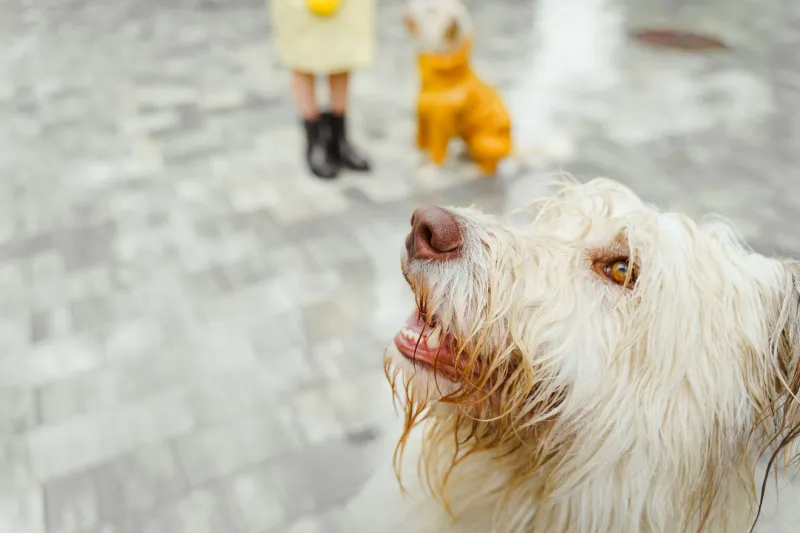
If your dog is thin-coated, very old or especially bony, a coat can help on cold, damp mornings. Not every dog needs one, and plenty will object loudly. But an older dog who shivers at the door is telling you something. A towel-down after a wet walk is also worth the faff. Damp fur holds the cold.
Know the line between slow and sore
A slower dog is not automatically a sore dog. Winter makes everyone a bit reluctant. But a dog who is noticeably slower than last week, or who takes longer to rise, deserves a note. Look out for limping that does not ease after a few minutes, yelping when touched or moved, reluctance to go up stairs, swollen or hot joints, knuckling paws, or a sudden change in toilet habits. A dog who stops eating or seems unusually tired should also be checked.
Do not reach for human painkillers or leftover medication. Speak to your vet. If your dog is already on joint support or pain relief, winter is a sensible time to check the plan still fits. A quick vet review before the coldest weeks is often easier than an emergency appointment in the dark.
A weekly rhythm that fits real life
You do not need to track every step. A three-line note on your phone is enough: date, route length, and anything you noticed. Was your dog stiff after the walk? Did they need help on the stairs? Did the limp settle or hang around? That sort of detail is gold to a vet, and it stops you relying on memory when you are standing in a consultation room trying to remember whether Tuesday was the bad day.
If a dog sitter or walker is covering some of the week, leave a short note about warm-ups, preferred routes and any stiff days. Fetch My Dog sitters are used to the small details that make a difference, but clear instructions always help. Senior dogs are creatures of habit, and winter is not the time to change everything at once.
The bottom line
Older dogs do not need to be wrapped in cotton wool. They need warm muscles, grippy floors, short interesting walks and a human who notices when something changes. Winter mobility is really a series of small, repeated choices. A few mats here, a slower start there, a shorter loop and a warm towel at the door. Do that consistently and your older dog can keep enjoying the season without paying for it the next morning.