Tinsel, Tins and Timings: A Dog-Safe December Sweep for Busy UK Homes
December has a way of filling a house quietly. One day the kitchen worktop is normal; the next there is an advent calendar behind the kettle, a selection box in a coat pocket and a tin of Quality Street that someone has already opened. For dogs, this is not background decoration. It is a series of small, movable food puzzles.
The goal is not to cancel Christmas or wrap the dog in bubble wrap until January. It is to do a short, sensible sweep before the month gets loud. Twenty minutes is enough to spot the obvious traps, set up a drop zone and work out what you will say when a guest arrives with a gift bag and a bar of chocolate in their hand.
Start with the calendar, not the tree
Most dog owners think about the Christmas tree first. Fair enough — it is big, shiny and apparently built for tail-wagging. But the more common December problem is smaller and quieter: chocolate that is meant to be eaten one square at a time.
Advent calendars are especially good at this. They sit on low shelves, sofa arms or the floor beside a laptop. The cardboard is easy for a dog to investigate, and the chocolate inside is often milk or dark. Dark chocolate is the bigger concern, and any chocolate plus raisins is a firmer ‘call the vet’ situation than many people realise.
The simple fix is a calendar shelf. Pick one spot that is above nose height and not next to the door, the bin or the dog bed. Put every advent calendar there each evening after the day’s door has been opened. If children are involved, make it a routine rather than a telling-off: calendar back on the shelf before bedtime, same as teeth and stories.
The 20-minute pre-Christmas sweep
Set a timer on your phone and go room by room. You are not aiming for a show home. You are looking for food, wrappers, small swallowable bits and places where a guest might put something down.
Hallway and porch
Check coat pockets, handbags, delivery bags and the shelf where post lands. A forgotten chocolate bar in a coat pocket is exactly the sort of thing a dog can find during a five-minute wait by the door. Move bags to a high hook or a lidded box, and make sure the bin is not overflowing with wrappers.
Living room
Look at coffee tables, side tables, sofa cushions and the floor around the TV. Tins of chocolates, open selection boxes, nuts, wrapped sweets and chocolate coins all need to live above waist height or behind a cupboard door. Tinsel is not food, but loose strands and small baubles can still cause a blockage. If your dog is a chewer, keep tinsel above the tree’s lower branches and skip edible decorations altogether.
Kitchen
This is the big one. Check worktops, the fruit bowl, the bread bin, the fridge and the kitchen bin. Christmas pudding, mince pies, raisins, sultanas and grapes are all worth keeping well out of reach. So is anything containing xylitol, which turns up in some sugar-free sweets and chewing gum. Put a lid on the bin and empty it before it becomes a mountain.
Bedroom and spare room
Guest bedrooms are where presents go to hide. They are also where handbags, medication and hotel chocolates end up. Close suitcases, zip bags and keep gifts in a cupboard rather than on the bed. If relatives are staying, give them a clear spot for their things that is not the floor.
Under the tree
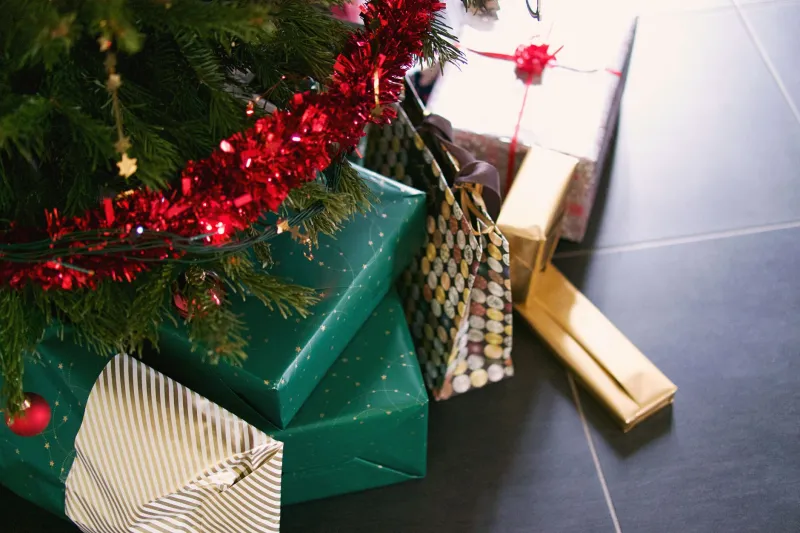
Presents are not automatically a problem, but food gifts are. A box of chocolates under the tree is a dog-level snack in waiting. Either keep edible gifts in a closed cupboard until Christmas Eve, or put a temporary barrier around the tree if your dog is young, anxious or very interested in parcels.
A drop zone that does the thinking for you
The front door is where December chaos enters. Build a small landing zone: a high hook for coats, a lidded box or deep basket for bags, and one clearly labelled tin or cupboard for any chocolate that guests bring. The phrase to teach the household is simple: bags up, coats up, chocolate in the tin.
This matters even more if you use a dog walker or sitter. At Fetch My Dog, we see how often the risk is not the dog’s own family but the extra traffic of December — visitors, deliveries, extra bags and people who do not know the house rules. If someone else is doing the midday walk or a sitting visit, leave a short note by the door: where the chocolate goes, which cupboard is dog-safe and what to do if a wrapper is found chewed. No essay needed. A few lines on the fridge sheet is enough.
The calm script for guests
Most people are not trying to put your dog at risk. They simply do not think about chocolate the way a dog owner does. So keep the request friendly, specific and boring. Boring works.
Try: ‘Before you come in, could you keep bags and coats on the hook by the door? We’ve got a dog who is very good at finding chocolate, so any treats or gifts are going in the blue tin on the high shelf. It saves us a vet trip.’
For family, you can be even more direct: ‘We’re doing a chocolate amnesty this year. Hand it over at the door and I’ll put it away.’ For children, avoid making it a shame game. ‘The dog’s nose is better than ours — chocolate stays in the tin’ is usually enough.
If someone forgets, move the item quietly and carry on. Telling the dog off after the fact does not help, and it can make a nervous dog more secretive about what they have found.
If something slips through
Do not panic, and do not induce vomiting unless your vet has told you to. Note what was eaten, roughly how much, when it happened and your dog’s weight. Keep the packaging if you can. Then call your vet or out-of-hours service for advice. Signs such as vomiting, restlessness, a racing heart or tremors need prompt attention, especially with dark chocolate or anything containing raisins.
December is busy enough without turning the house into a fortress. A calendar shelf, a front-door drop zone, a quick room-by-room sweep and one calm sentence for guests will do most of the work. The tree can still sparkle. The dog can still mooch about hoping for crumbs. You just want the chocolate to be somewhere the nose cannot reach.